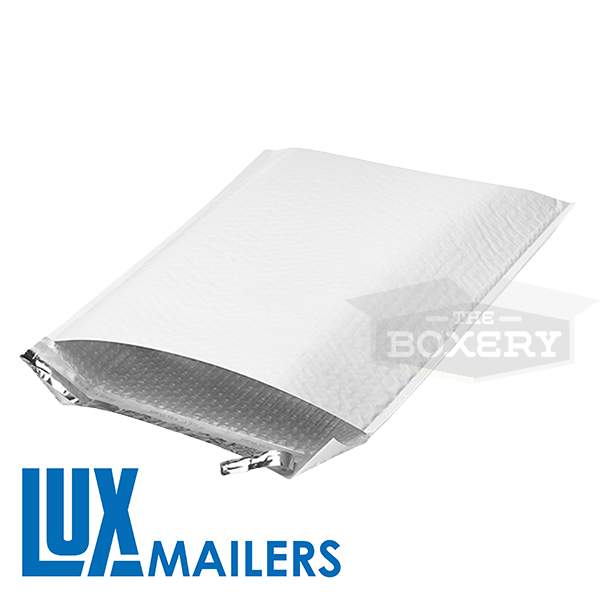
A ceramic mug wrapped in a padded pouch and dropped into a mail truck for a 2,000-mile trip. Sounds risky, right? It isn’t always. Large bubble mailers get a bad reputation among sellers shipping breakables, but the truth is more complicated than “box good, mailer bad.”
Seventeen years of watching packages come back damaged (or not) taught one lesson fast: the mailer itself rarely fails on its own. It’s the mismatch between product and packaging that causes problems. A 4×8 bubble mailer stuffed with a phone case handles cross-country transit just fine. That same size crammed around a glass ornament? That’s asking for trouble, no matter how much padding surrounds it.
So where’s the line? Understanding what large bubble mailers can realistically protect against — and where a box takes over — matters more than picking a size off a chart and hoping for the best.
What “Large” Really Means in Bubble Mailer Sizes
A seller ships a ceramic mug cross-country in a mailer that looked plenty roomy on screen. It arrives cracked. Why? The bag was rated for books, not for anything with real depth or weight. “Large” gets thrown around loosely in this category, and that vagueness costs sellers money in claims and refunds. In practice, anything under a #4 (9×12) is really a mid-size mailer, not a large one — despite what the label says.
Standard Bubble Mailer Sizes vs. Extra Large Bubble Mailers
Standard sizes run #000 through #7, covering roughly 4×8 up to 14.5×19 inches. True large bubble mailers start around the #6 and #7 range, where the bubble lining has enough depth to cushion small appliances, framed items, or multi-piece breakables. Extra large shipping envelopes push past that, into #8 territory (24×24), built for bulkier goods that still don’t need a rigid box.
Where 4×8 Bubble Mailers Fit Into the Size Chart
Here’s the thing — 4×8 bubble mailers aren’t large at all. They’re the smallest common size, meant for jewelry, small electronics, or flat non-fragile goods. Confusing a 4×8 with a genuine large mailer is exactly how breakables end up damaged in transit.
Do Large Bubble Mailers Hold Up Over Long-Distance Shipping
Large bubble mailers will not save a fragile item on a cross-country route through three sorting facilities. That’s the blunt truth. A mailer traveling coast to coast gets tossed onto conveyor belts, stacked under heavier boxes, and run through automated sorting equipment that doesn’t know or care what’s inside. Bubble cushioning absorbs shock from drops and light impacts, but it does almost nothing against crushing weight from other packages piled on top during a multi-day transit — whether it’s moving through USPS, UPS, or any carrier network.
Bubble Cushioning Limits: What Padding Can and Can’t Stop
Padding handles vibration, minor bumps, and surface scuffs well. It does not stop compression, bending, or a hard corner impact — the three things most likely to happen during long-haul shipping. Glassware, ceramics, and framed items are the worst candidates for any mailer format, regardless of size.
When a Box Beats a Padded Envelope for Breakables
Realistically, if the item can bend, crush, or shatter, a rigid corrugated box with proper void fill wins every time. Reserve large bubble mailers for durable, semi-rigid goods — think small electronics accessories or sturdy home goods — not anything genuinely breakable.
USPS, UPS, and Carrier Rules for Large Bubble Mailers
Ever wonder why your 12×17 mailer suddenly costs three times what you expected at the counter? Carrier rules on large bubble mailers aren’t just about weight — they’re about shape, flexibility, and how a machine reads dimensions. USPS treats padded envelopes as flexible — once a mailer’s thickness exceeds 3/4 inch, it can get bumped into a package rate instead of a flat letter or large envelope rate. UPS and FedEx go a step further and often require a minimum billable weight on any soft-sided mailer over 10×13, regardless of what’s actually inside.
USPS Bubble Mailer Sizes and Prices for First Class and Priority
Standard sizes like #0 (6×9) and #7 (14.25×20) qualify for First Class rates under 13 ounces. Go bigger — think 12.5×17.5 — and you’re pushed into Priority Mail territory, even if the item weighs less than a pound. That’s a real cost jump, not a small mailer, has a strict flat rate for large bubble mailers, based on size alone.
Dimensional Weight and Postage Costs on Extra Large Mailers
Dimensional weight rules apply once a mailer’s girth crosses carrier thresholds — length plus girth over 84 inches for USPS. Extra-large bubble mailers packed loosely inflate that number fast. Pack tight, measure twice, and check the current rate chart before printing a label.
Where to Buy Large Bubble Mailers in Bulk Without Overpaying
Here’s a number that surprises most sellers: buying single mailers at a drugstore or big-box shelf can run 3 to 5 times the per-unit cost of a wholesale case. A 10×13 padded envelope bought one at a time might run close to a dollar. Buy a case of 250 — that price often drops under 30 cents. That gap adds up fast once you’re shipping 50+ packages a week.
Wholesale Case Pricing vs. Retail Single-Unit Costs
Retail racks are built for convenience, not economics — you’re paying for the shelf space, not the padding. Online packaging suppliers selling by the case or pallet cut that markup out entirely. For sellers moving bulky, non-fragile goods like folded apparel or home textiles, buying large bubble mailers wholesale usually beats piecing together small padded envelopes one at a time. Check unit price at 250, 500 — 1,000 count tiers before committing.
Comparing Custom, Colored, and Kraft Options for Branding
Plain kraft still wins on cost.
But colored or metallic mailers (black, blue, gold) and custom-printed options let brands stand out without switching to boxes. Kraft bubble mailers tend to run cheaper than poly bubble versions and photograph better for unboxing content — worth weighing against a few extra cents per unit.